SAMO RAMEN
What makes ramen better, and how we know.
Recipes you can cook one step at a time, with every amount on one page and the sources shown.




Tonkotsu ramen.
Soup, tare, aroma oil and noodles, with every amount and step on one page. Follow it as written, or cook one step at a time with timers.
Open the recipe →CALCULATEMake it
your batch.
Enter the flour and hydration from your recipe. See the water quantity and compare a second percentage.
Open the calculator →THE TEAM
The cooks behind the bowls.
Five lives spent at the counter: one at the stockpot, one at the noodle board, one at the pass, one at the tare crock and one with the tasting ladle.
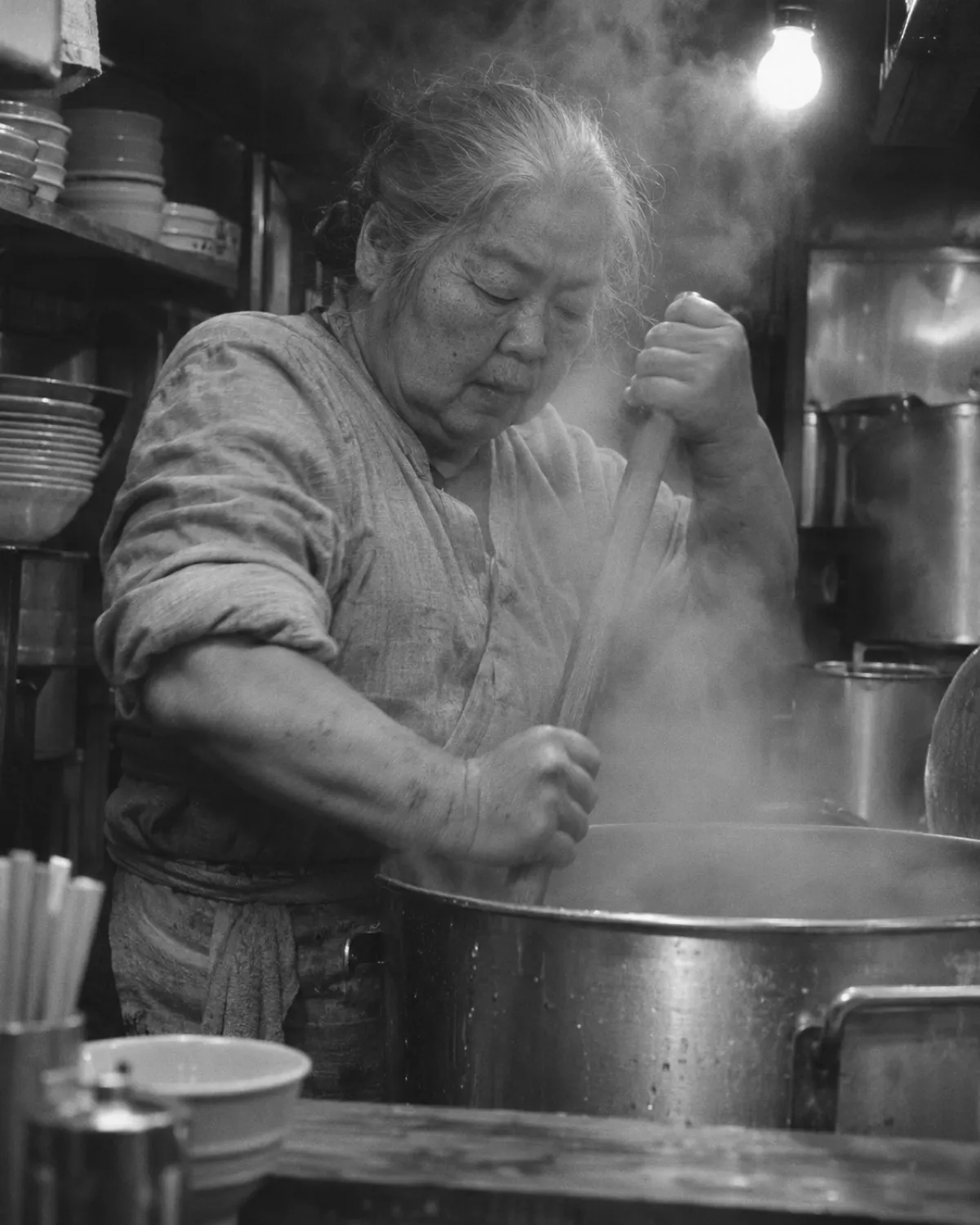
SOUP
Kiyoe Mutsuda
Kiyoe started at nineteen, washing bowls in her uncle’s nine-seat shop in the harbour town of Kōmaru. Forty-six years later the stockpot is hers. She arrives before the fish market opens, skims by eye and changes the bones by the weather, and she rarely says more than “eat it while it’s hot.” Regulars know a quiet room means the soup is right.
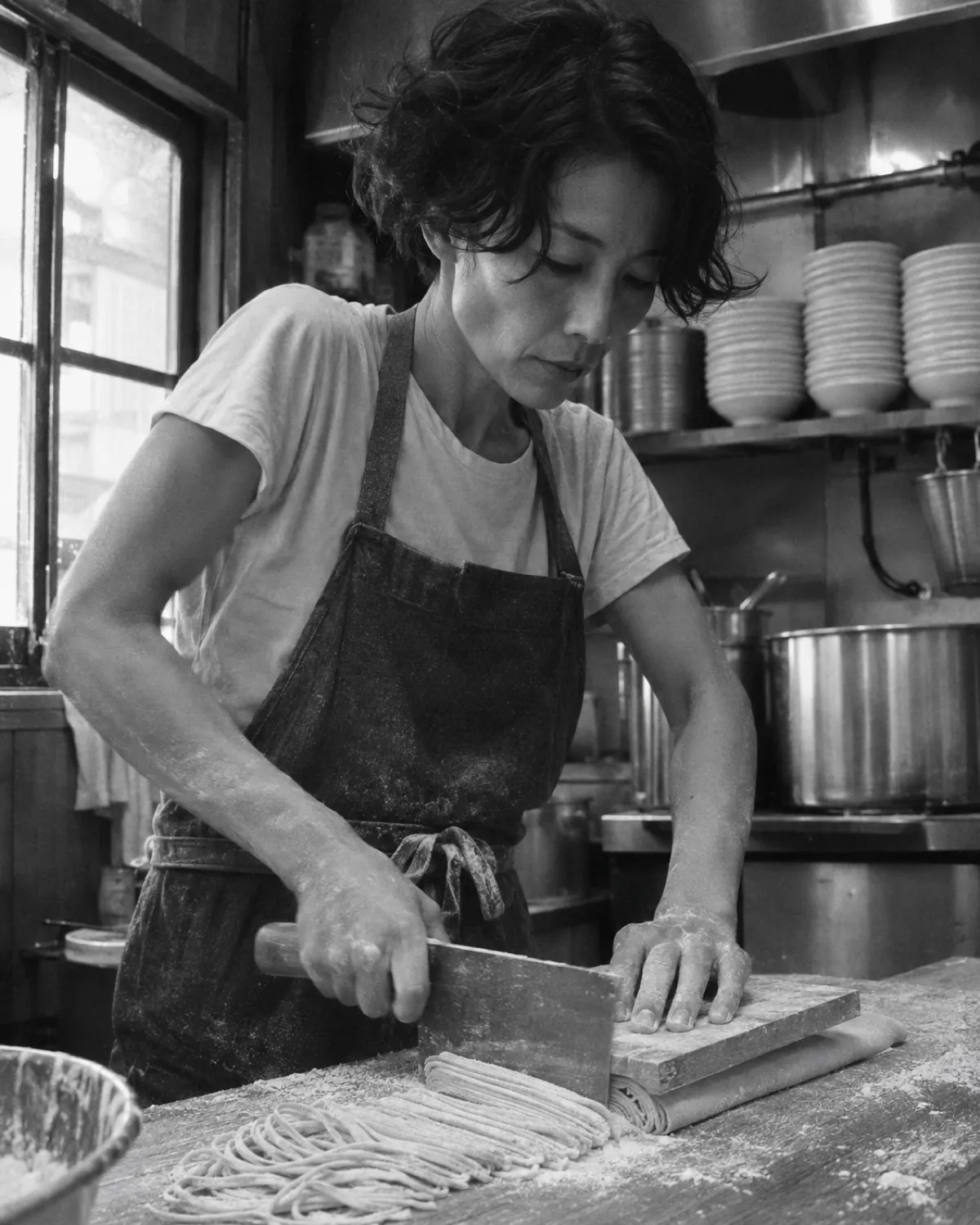
NOODLES
Natsuko Ide
Natsuko trained as a soba maker before a ramen master in the back streets of Oribe-chō let her take over his noodle room. She mixes and cuts every morning, and keeps a notebook of flour, water and the day’s humidity going back eleven years. On days the dough won’t behave, she would rather close than serve a noodle she doesn’t believe in.
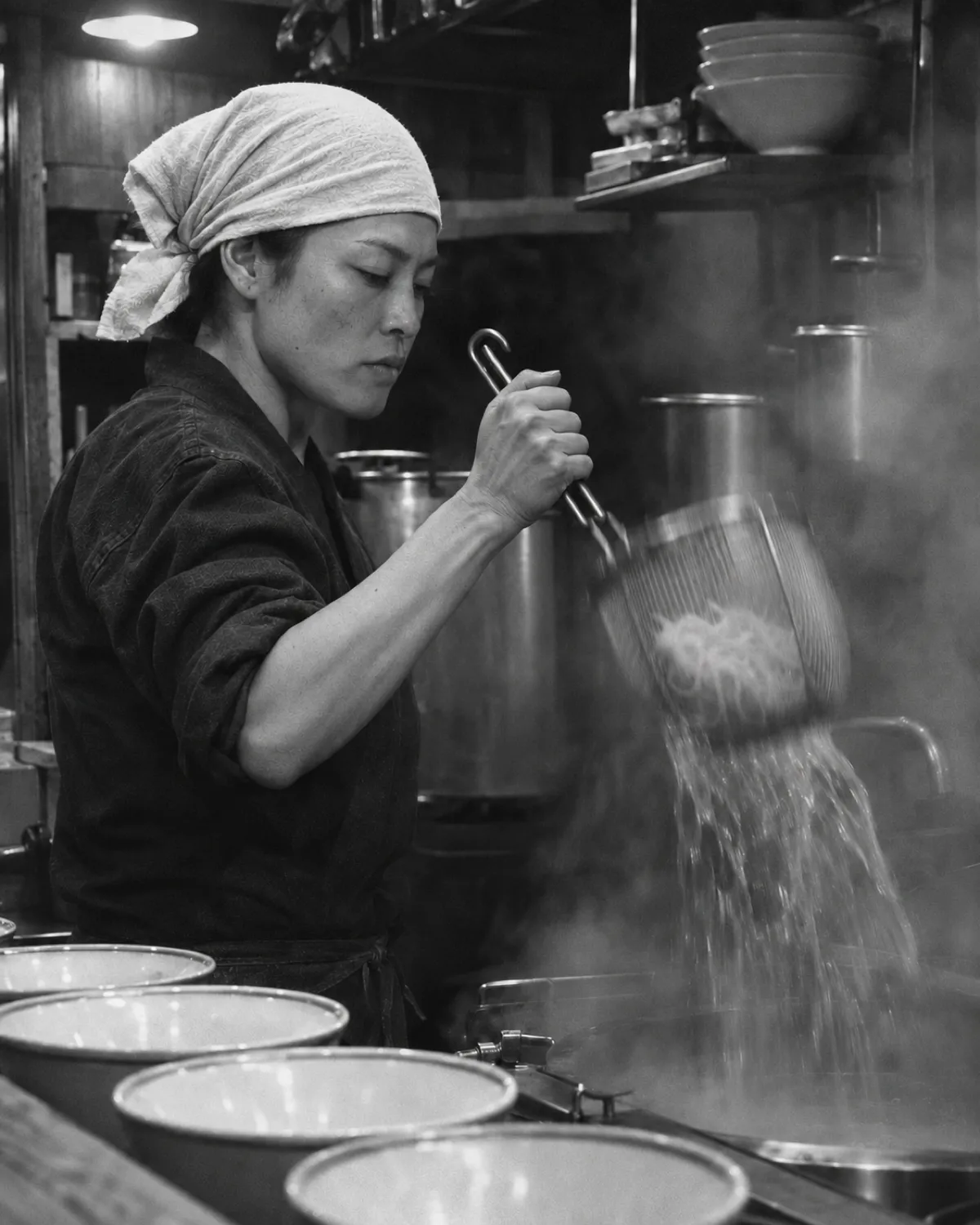
THE PASS
Rin Asaba
Rin washed pots for three years and watched for five more before she was handed the noodle basket. Now she runs the pass at lunch, timing each portion by the sound of the water rather than the clock. She says the work is learned in years, not weeks, and that the bowl is finished only when the customer picks up their chopsticks.
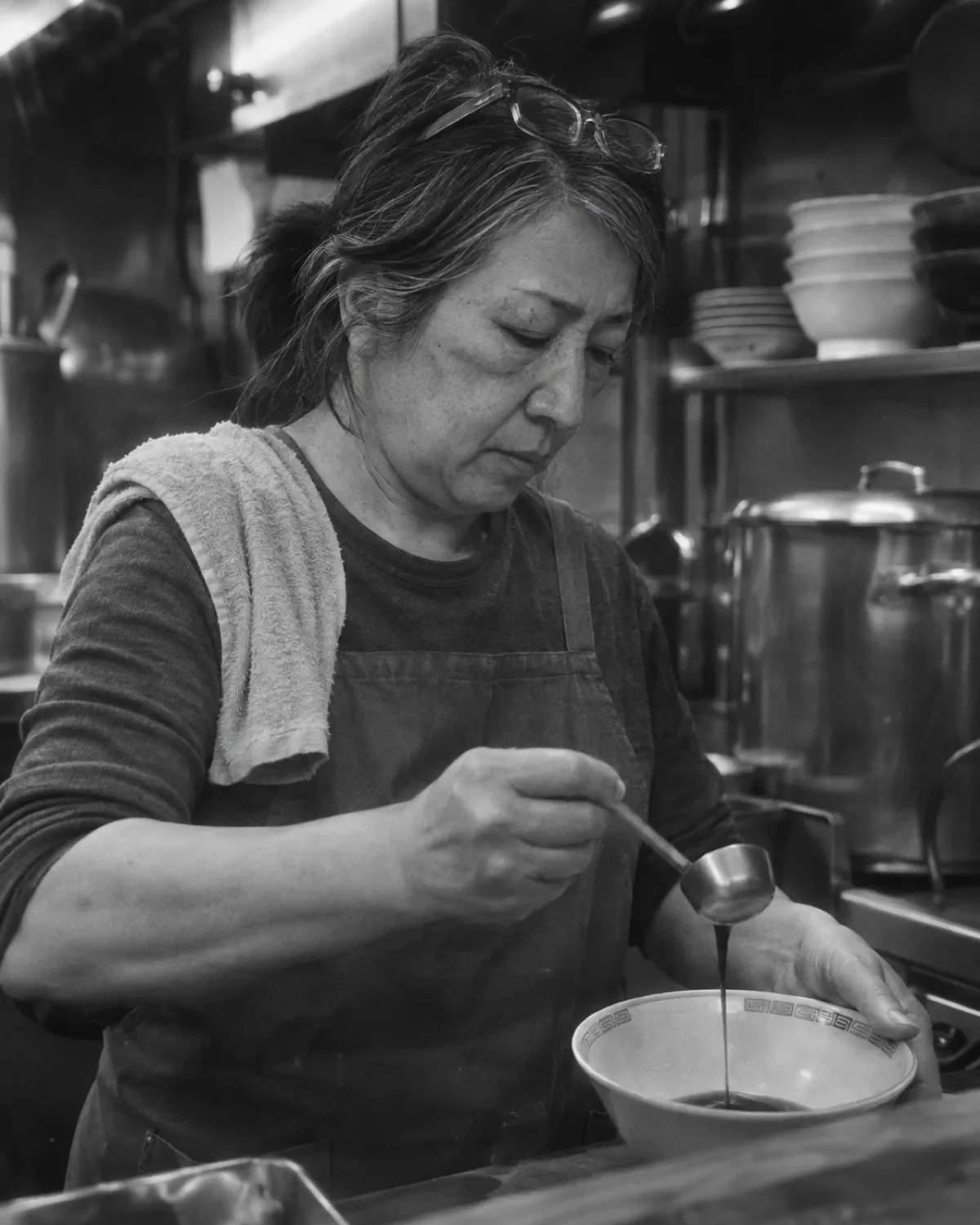
TARE
Michiyo Toga
Michiyo inherited a family shop and a clay crock of tare that has never been emptied, only topped up, since her mother’s time. Twice a year she drives up to a small soy brewery in the Sekigane valley to taste the new batch with the brewer before she buys. Each change she makes to the seasoning is so small that only she notices for the first month.
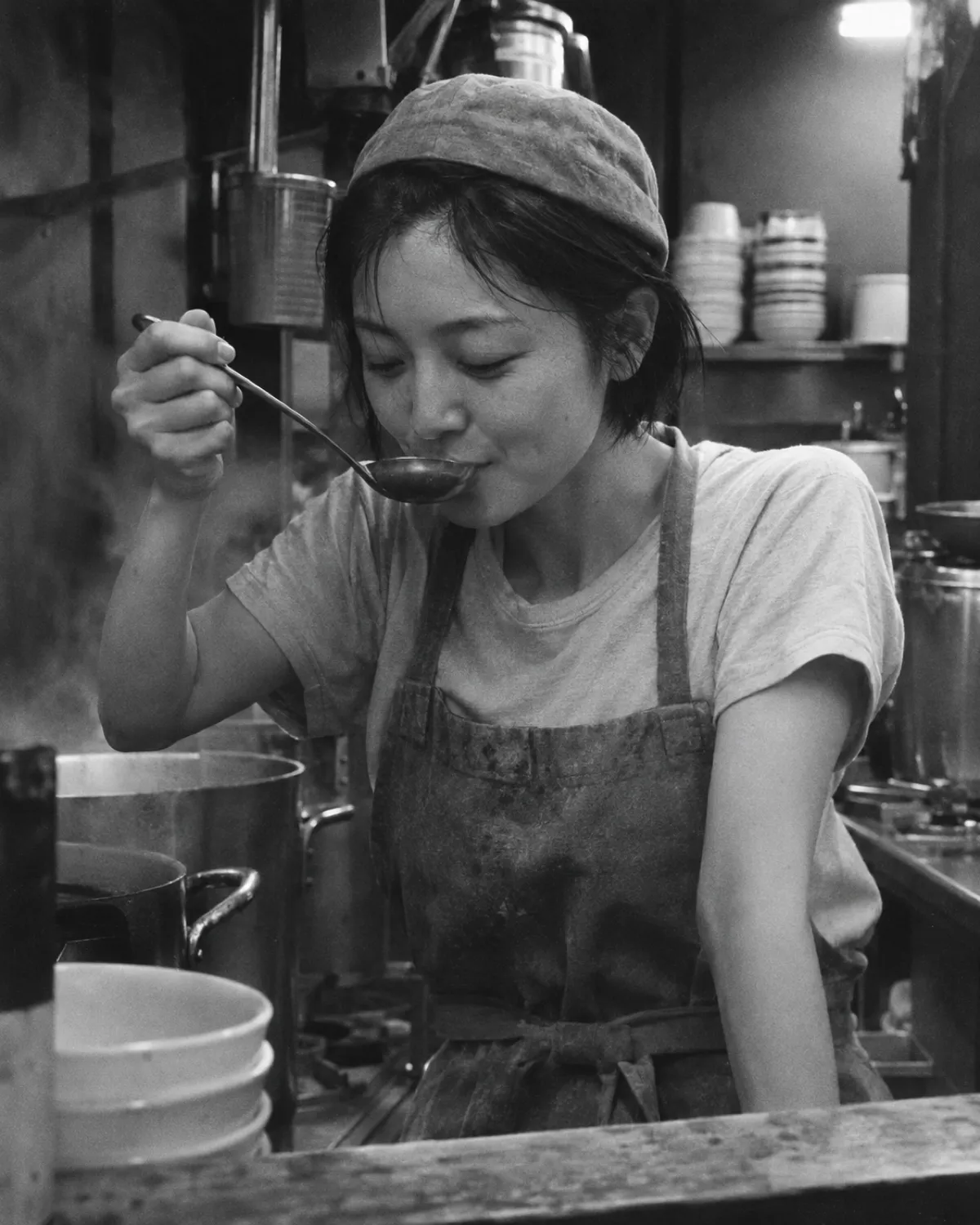
TASTING
Aoi Kurumada
Aoi ate her way through hundreds of counters before she ever worked one, filling notebooks with long, careful reviews of bowls she loved. Then a shop owner she had written about offered her an apron. She is the last to taste the soup every night, and the first to say when it has drifted.
The team are composite characters, drawn from the lives of veteran ramen cooks in Japan. Their names, places and details are invented, and their portraits are AI-generated illustrations, not photographs.
CRAFT WITH A REASON
A calculation is a beginning.
What happens in the kitchen comes next.
We show the arithmetic, link the sources, and keep observations separate from assumptions.
How this notebook is made →